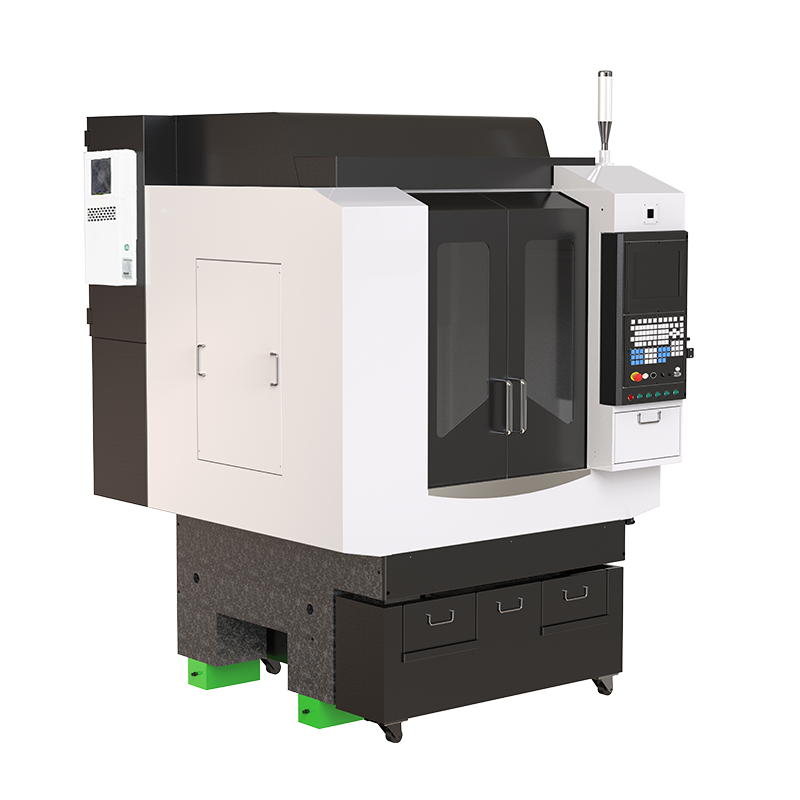
Laser cutting processing replaces traditional mechanical knives with invisible beams of light. It has the characteristics of high accuracy, fast cutting, not limited to cutting pattern limitations, automatic layout saving materials, smooth cuts, and low processing costs. It will gradually improve or replace traditional metal cutting process equipment. The mechanical part of the laser blade does not come into contact with the workpiece, and will not cause scratches on the surface of the workpiece during operation; Laser cutting speed is fast, and the incision is smooth and flat, generally without the need for subsequent processing; The cutting heat affected zone is small, the plate deformation is small, and the cutting seam is narrow (0.1mm~0.3mm); The incision is free of mechanical stress and shear burrs; High machining accuracy, good repeatability, and no damage to the material surface; CNC programming, capable of processing any flat plan, capable of cutting large entire boards without the need for mold opening, economical and time-saving.
Compared with traditional cutting processes such as oxygen acetylene and plasma, laser cutting has fast speed, narrow cutting seam, small heat affected zone, good perpendicularity of the cutting seam edge, and smooth cutting edge. At the same time, there are many types of materials that can be laser cut, including carbon steel, stainless steel, alloy steel, wood, plastic, rubber, cloth, quartz, ceramics, glass, composite materials, etc. With the rapid development of market economy and the rapid progress of science and technology, laser cutting technology has been widely applied in fields such as automobiles, machinery, electricity, hardware, and electrical appliances. In recent years, laser cutting technology has been developing at an unprecedented speed, with an annual growth rate of 15% to 20%. Since 1985, China has been growing at an annual rate of nearly 25%. At present, there is still a significant gap in the overall level of laser cutting technology in China compared to advanced countries. Therefore, laser cutting technology has broad development prospects and huge application space in the domestic market.
During the cutting process of a laser cutting machine, the beam of light is focused into a small focal point through the lens of the cutting head, achieving a high power density at the focal point. The cutting head is fixed on the z-axis. At this time, the heat input by the beam far exceeds the part of the heat reflected, conducted or diffused by the material, and the material is soon heated to the melting and vaporization temperature. At the same time, a Jet stream blows out the melted and vaporized material from the coaxial or non coaxial side, forming holes for material cutting. With the relative movement of the focal point and the material, the hole forms a continuous and narrow cutting seam, completing the cutting of the material.