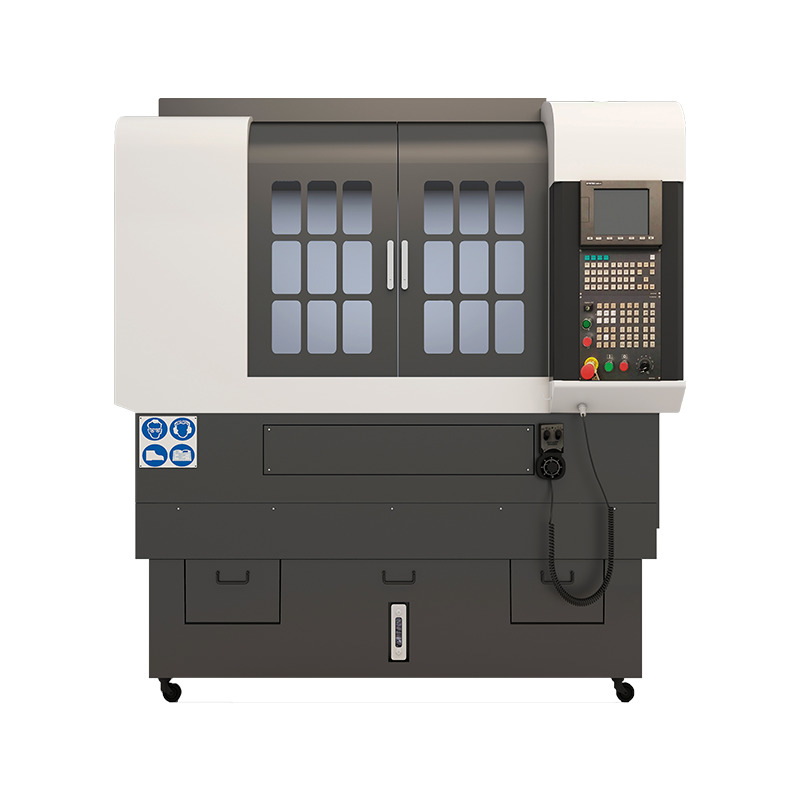
Fiber laser refers to a laser that uses rare earth doped glass fiber as a gain medium. Fiber laser can be developed based on fiber amplifiers. Under the action of pump light, it is easy to increase the formation success rate density in the fiber, causing the "Particle number inversion" of the laser energy level of the laser working material. When a positive feedback loop (forming a resonator) is properly added, the laser oscillation output can be formed.
As a representative of third-generation laser technology, fiber lasers have the following advantages:
(1) The advantages of miniaturization and intensification brought by the low manufacturing cost, mature technology, and the flexibility of glass fiber optics; (2) Glass fiber does not need strict phase matching like crystal for incident pump light, which is due to the wide Absorption band caused by non-uniform broadening caused by Stark splitting of glass matrix; (3) Glass materials have an extremely low volume to area ratio, fast heat dissipation, and low losses, resulting in high conversion efficiency and low laser threshold; (4) Multiple output laser wavelengths: This is because the energy levels of rare earth ions are very rich and there are many types of rare earth ions; (5) Tunability: Due to the wide energy levels of rare earth ions and the wider fluorescence spectrum of glass fibers. (6) Due to the absence of optical lenses in the resonant cavity of fiber lasers, they have the advantages of being free from adjustment, maintenance, and high stability, which are incomparable to traditional lasers. (7) Fiber optic export enables lasers to easily handle various multidimensional and arbitrary spatial processing applications, making the design of mechanical systems very simple. (8) Proficient in harsh working environments, with a high tolerance for dust, vibration, impact, humidity, and temperature. (9) No need for thermoelectric refrigeration or water cooling, just simple air cooling. (10) High electro-optic efficiency: The comprehensive electro-optic efficiency can reach over 20%, greatly saving power consumption during work and operating costs. (11) The high-power, commercial fiber laser is six kilowatts.